
The 2000’s: “Legally Blonde” (2001), “Mean Girls” (2004), and “The Devil Wears Prada” (2006)
Early 2000’s movies continue to be some of the most influential for modern day style inspiration. Who doesn’t look at a Juicy Couture tracksuit and think of Regina George, a cerulean sweater and think of Andy Sachs or get a sense of déjà vu at the sight of a pink suit because of Elle Woods.
Legally Blonde’s costume designer Sophie de Rakoff shares the story behind Elle Wood’s (Reese Witherspoon) signature color saying that pink was chosen after visiting some sorority houses in downtown Los Angeles. At first de Rakoff hesitated to pick pink feeling that it might be too on the nose, but the real life sororities confirmed that it was the right choice.
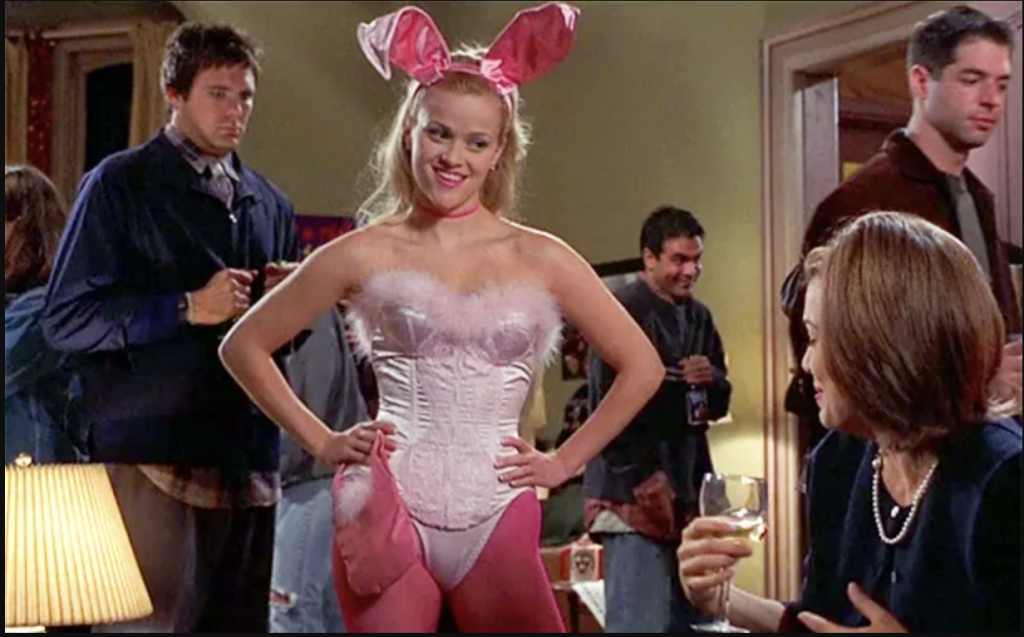
Elle’s bunny costume which she wears to a Harvard halloween party is one of the most commonly recreated looks from the movie. It’s a reference to the playboy bunny, of course, but Reese Witherspoon thought that Elle would rather be a cute bunny than a sexy one. Bright pink tights underneath the body suit, feathers, and ears that are a bit floppy give a final flirty and flashy effect as opposed to the classic black playboy bunny.
Regina George (Rachel McAdams) of Mean Girls shares the signature color of pink with Elle Woods but costume designer Mary Jane Fort pulled from some different sources. Regina herself Fort says was in part inspired by Paris Hilton who she describes as the original influencer.
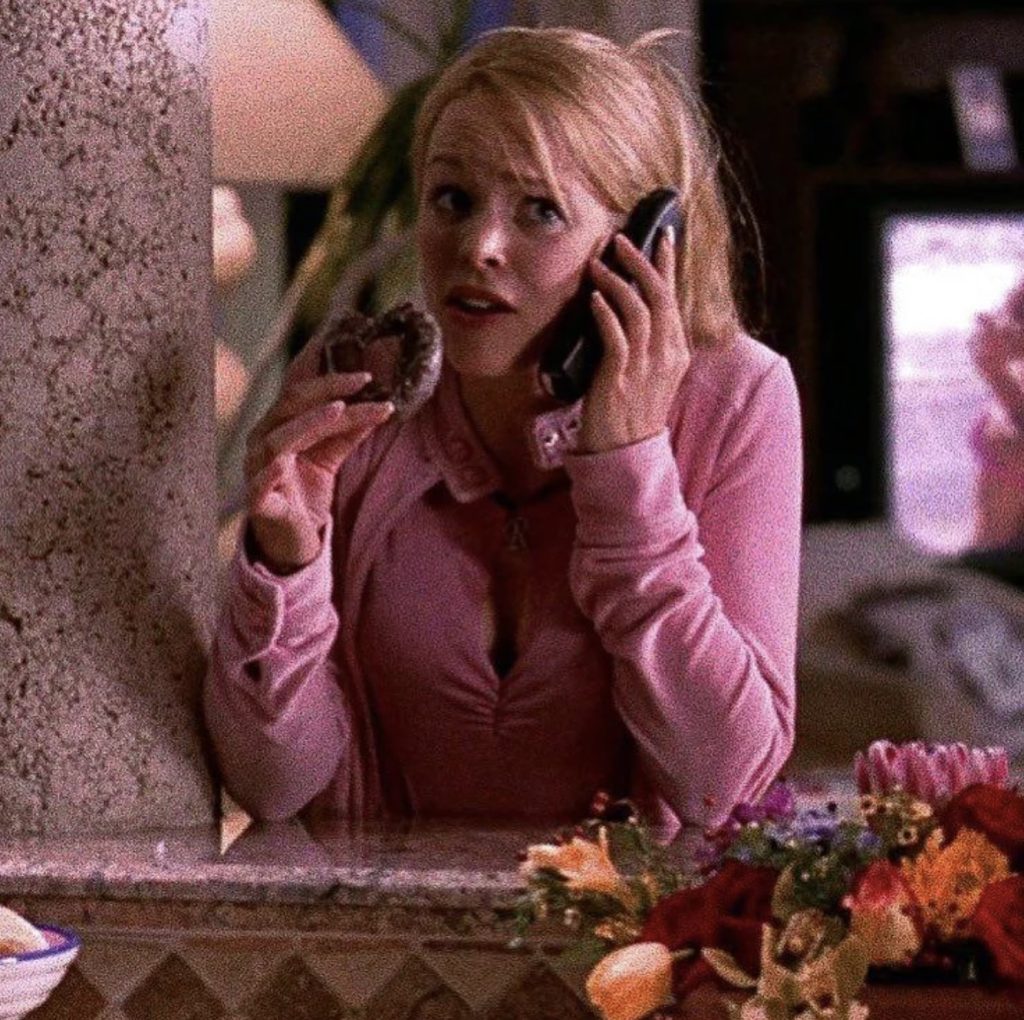
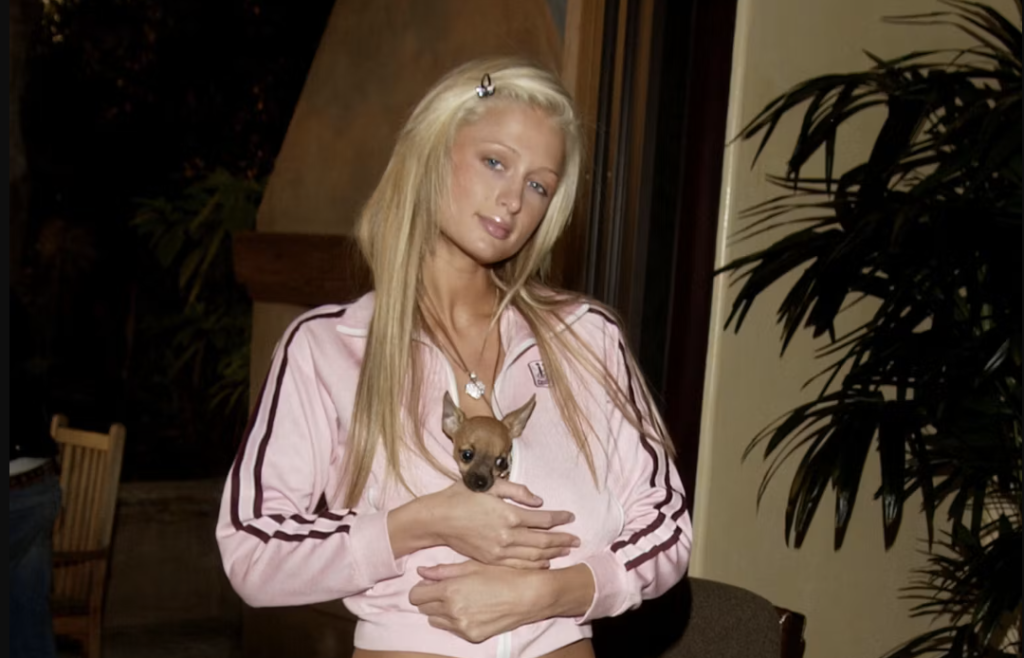
Paris Hilton and Regina George shared a closet of low rise jeans, a healthy dosage of the color pink, and tracksuits. Regina certainly plays the role of influencer at North Shore High School in the films. Regina is the trendsetter, her taste then trickles down to everyone below her in the hierarchy starting with her inner circle of plastics.
Speaking of trends trickling down, Miranda Priestly (Meryl Streep) from The Devil Wears Prada (2006) certainly has that level of influence as well. Miranda’s sunglasses, her coats, and her Prada tote bag are all inspired by Anna Wintour the editor in chief of Vogue from 1988 through 2025.
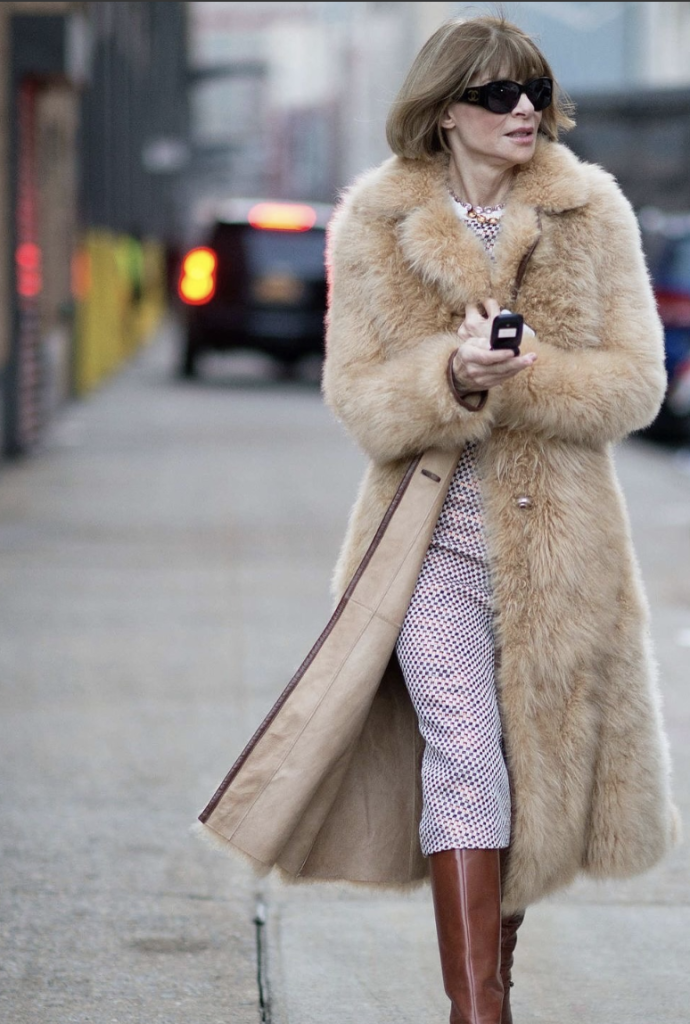
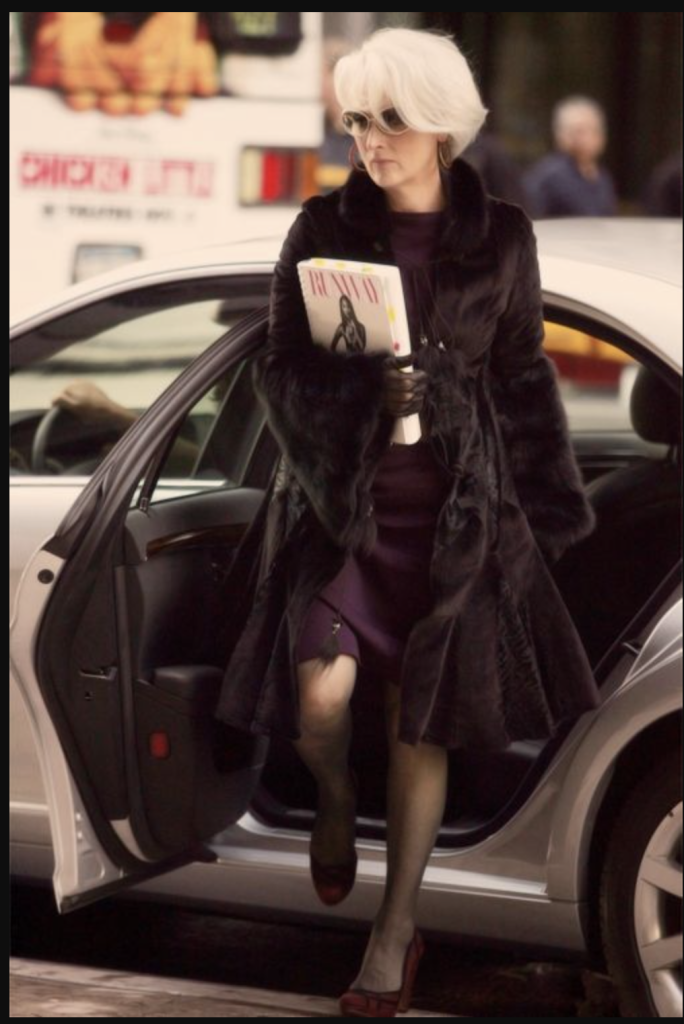
The first scene of Miranda in the film features her sporting a black fur coat and Azzedine Alaïa heels which costume designer Patricia Fields describes as a deep oxblood red with hints of black perfectly setting up Miranda as the antagonist of the film. Fields was nominated for an Oscar for her styling of the cast of The Devil Wears Prada.
The 2010’s: “Black Swan” (2010), “The Hunger Games: Catching Fire” (2013), and “The Great Gatsby” (2013)
Black Swan’s most recognizable fashion is designed by Kate and Laura Mulleavy who own the clothing brand Rodarte together. Director Darren Aronofsky says the film’s star Natalie Portman introduced him to the sisters suggesting that it would be a good project for their introduction into designing for film.
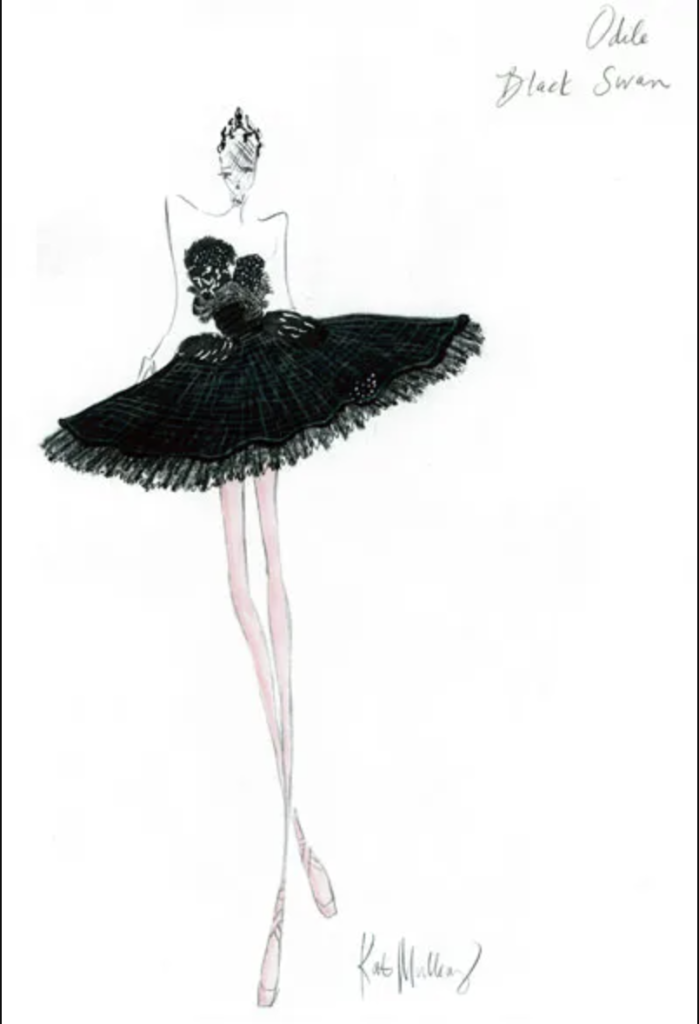
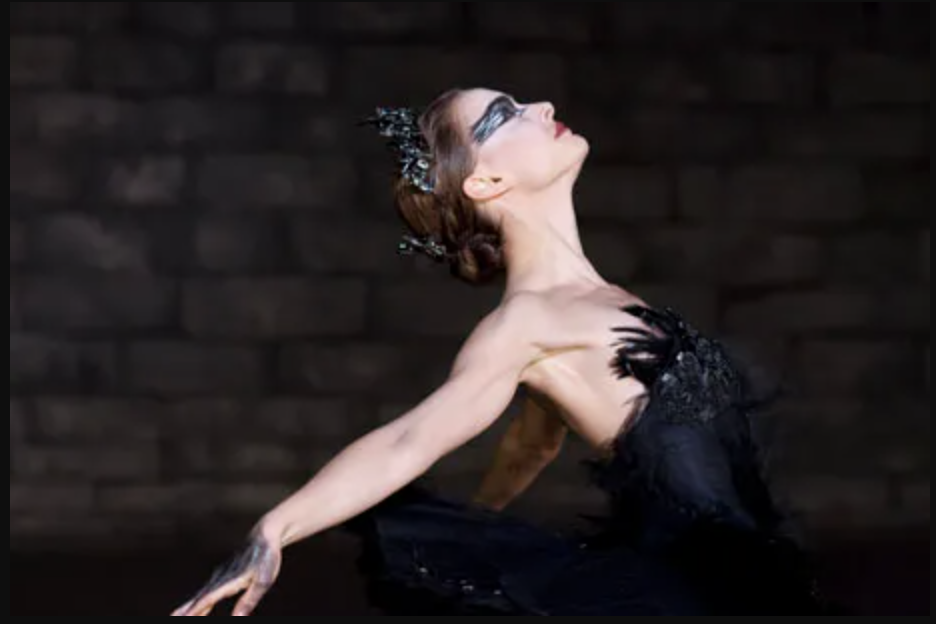
The sisters are responsible for the costumes Portman wears as Odile, the black swan during the film.
Effie Trinket (Elizabeth Banks) in the Hunger Games: Catching Fire (2013) wears some of the most eye-catching outfits in the series. Effie is the link between the simple garments worn by the poor in District 12 and the extravagance of the wealthy in the Capitol.
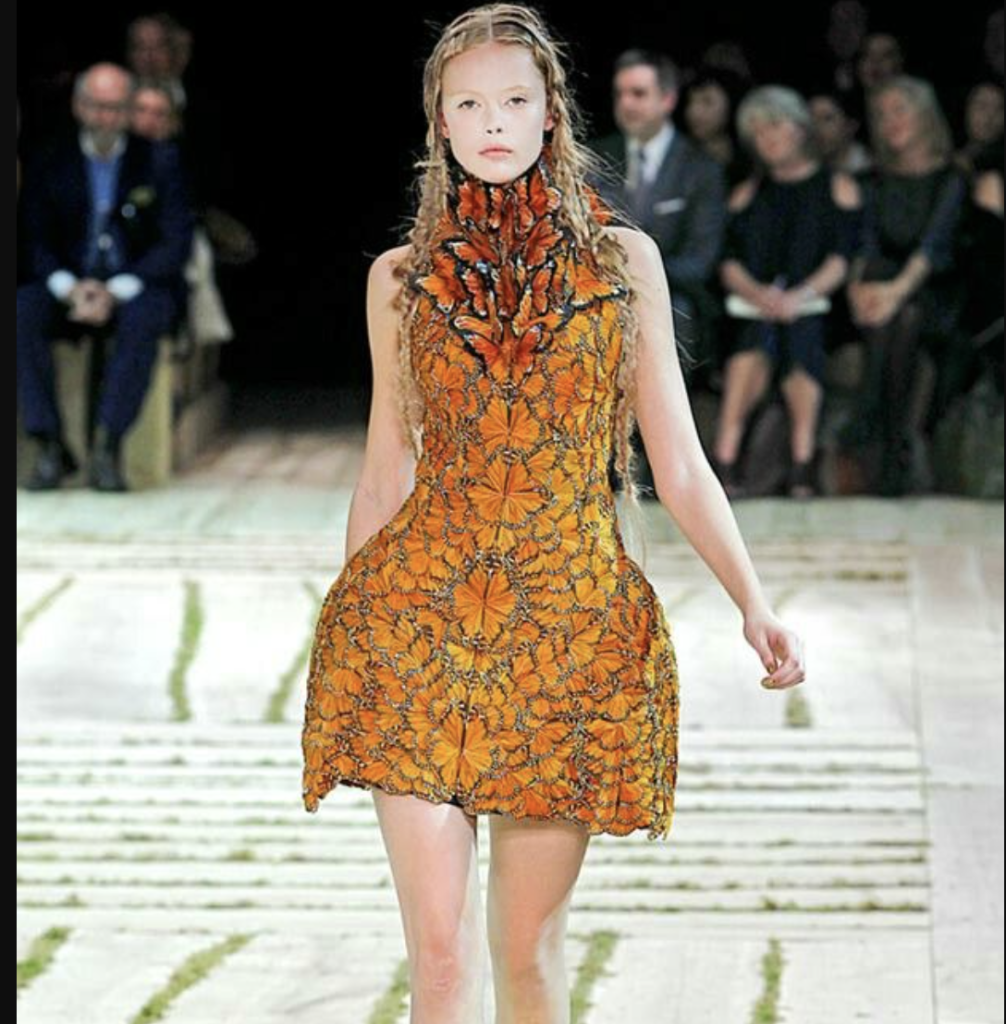
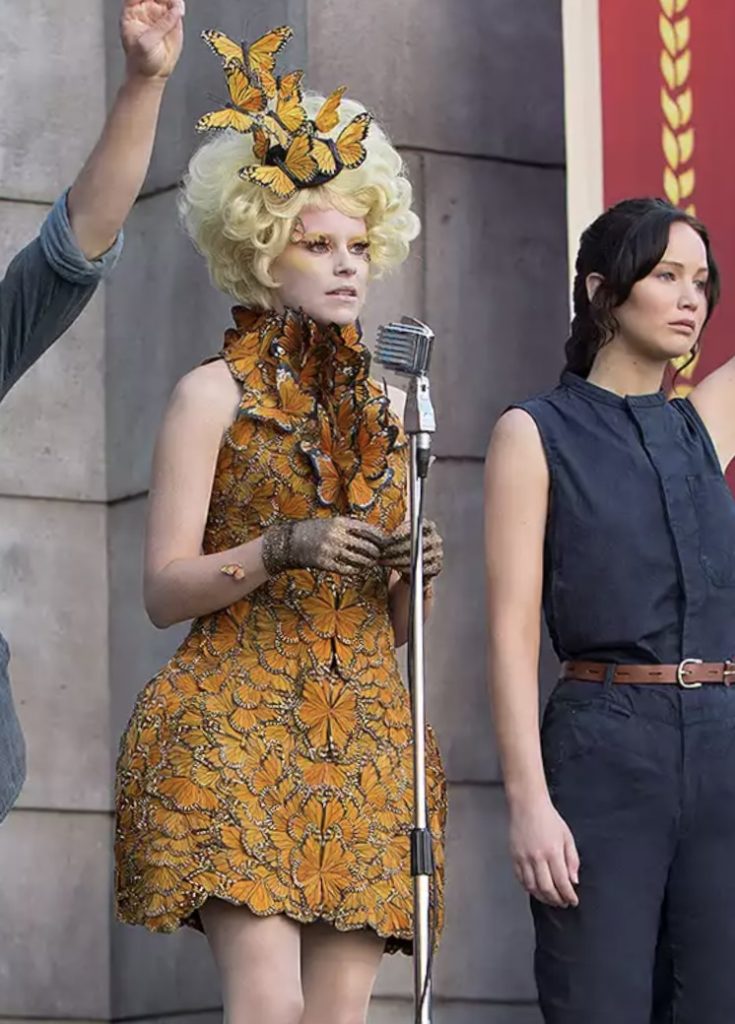
One of Effie’s most striking outfits is her butterfly dress worn during the second reaping ceremony we see in the franchise. The butterfly dress is one of many pieces designed by Alexander McQueen worn by Banks while playing Effie. The butterflies are actually painted feathers, painstakingly placed to look like the monarchs have chosen to land on the wearer.
Baz Luhrmann’s The Great Gatsby (2013)’s costume designer Catherine Martin worked with Brooks Brothers and Miuccia Prada to create a modern take on the roaring twenties. Although the majority of Prada’s contributions were worn by background characters, a few of Daisy Bucchanan’s (Carey Mulligan) dresses were designed by Prada
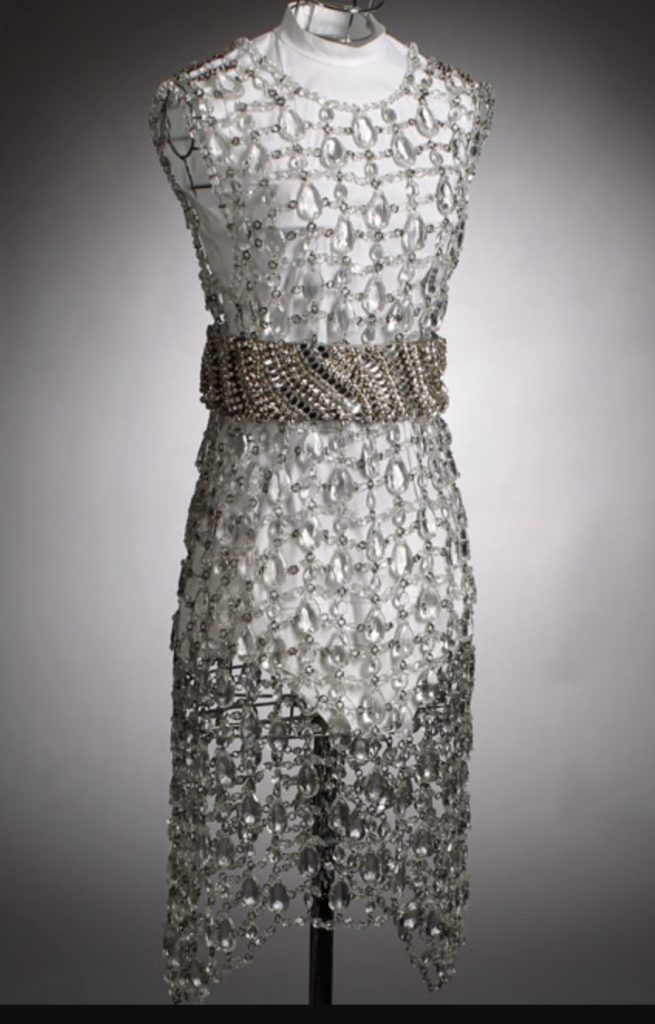
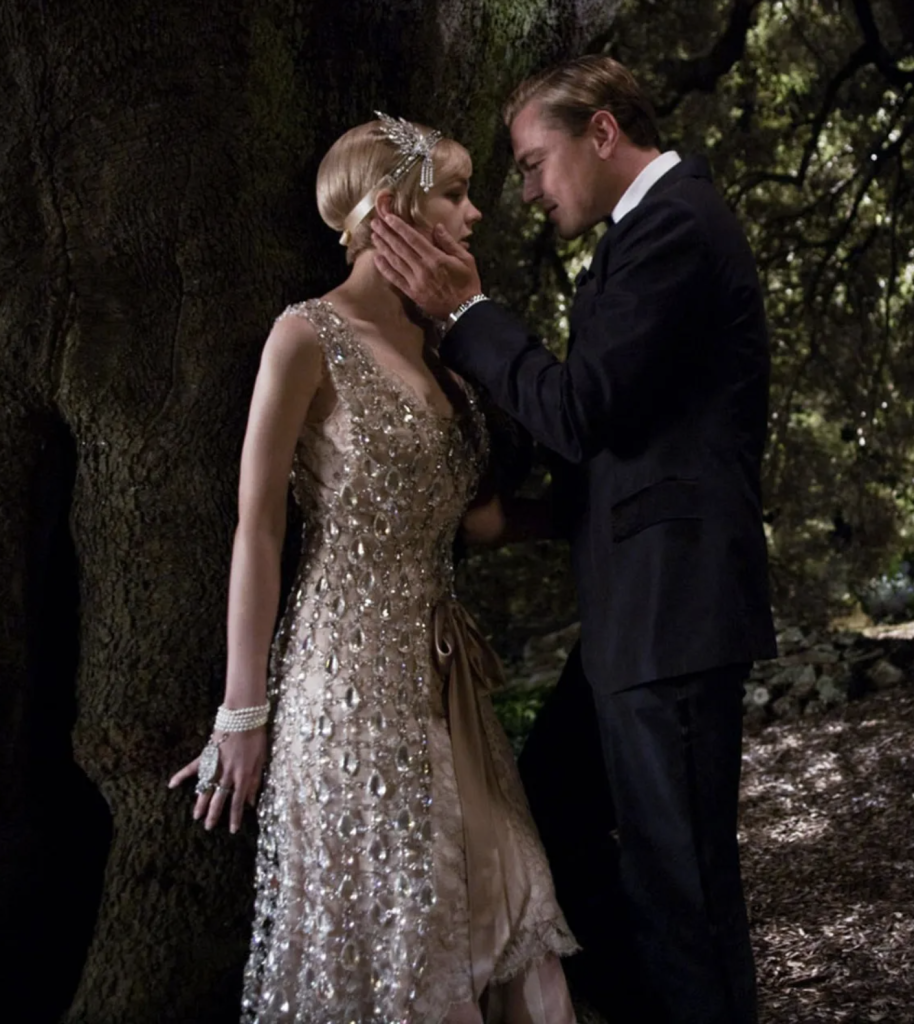
One of the dresses in question designed by Prada for Mulligan is the chandelier dress Daisy wears which is inspired by a collection Prada designed in 2010. Prada says that she was surprised when Catherine Martin pointed out how many of her designs from the Prada archives could be easily adapted to suit the silhouette of the 1920’s. She admits that it is not an era which she had in mind when designing but she produced the updated take on the 20’s that Baz Luhrmann sought to capture in his adaptation of Gatsby.
The 2020’s: “Cruella” (2021), “The Devil Wears Prada 2” (2026), and “Mother Mary” (2026)
Cruella is a retelling of 101 Dalmations following an aspiring fashion designer Estella (Emma Stone) through her transformation into Cruella de Ville. Styling Stone for the film was a daunting task for costume designer Jenny Beavan, who ended up creating 47 looks for Stone to wear as Cruella.
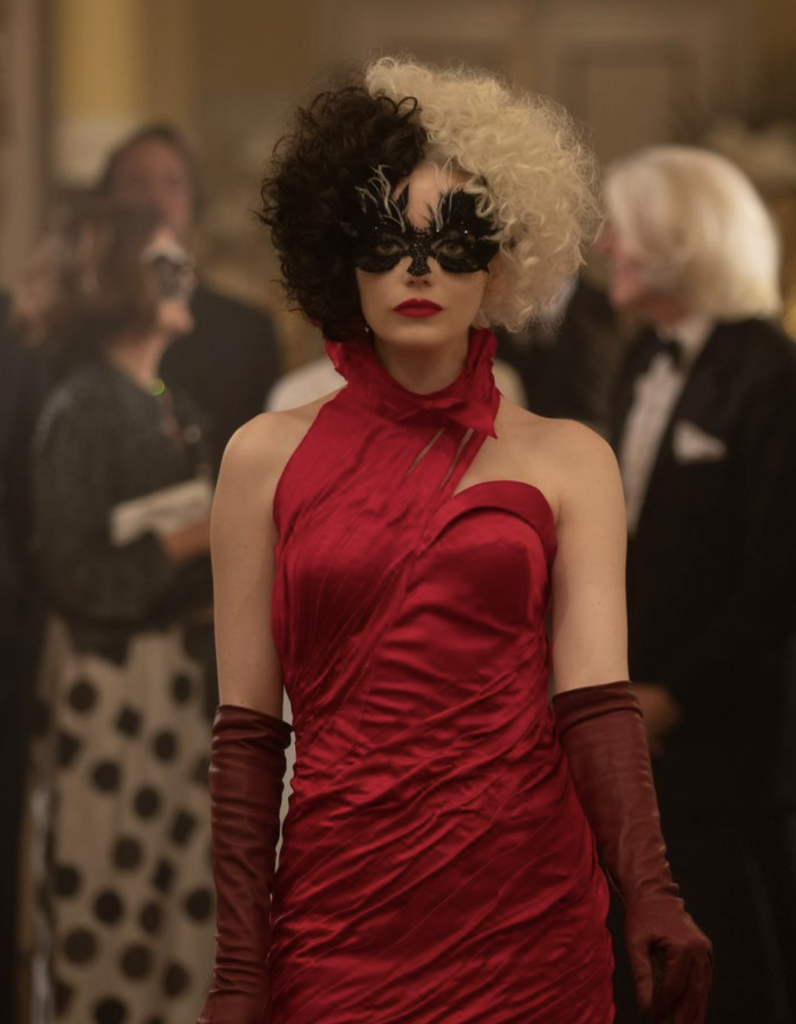
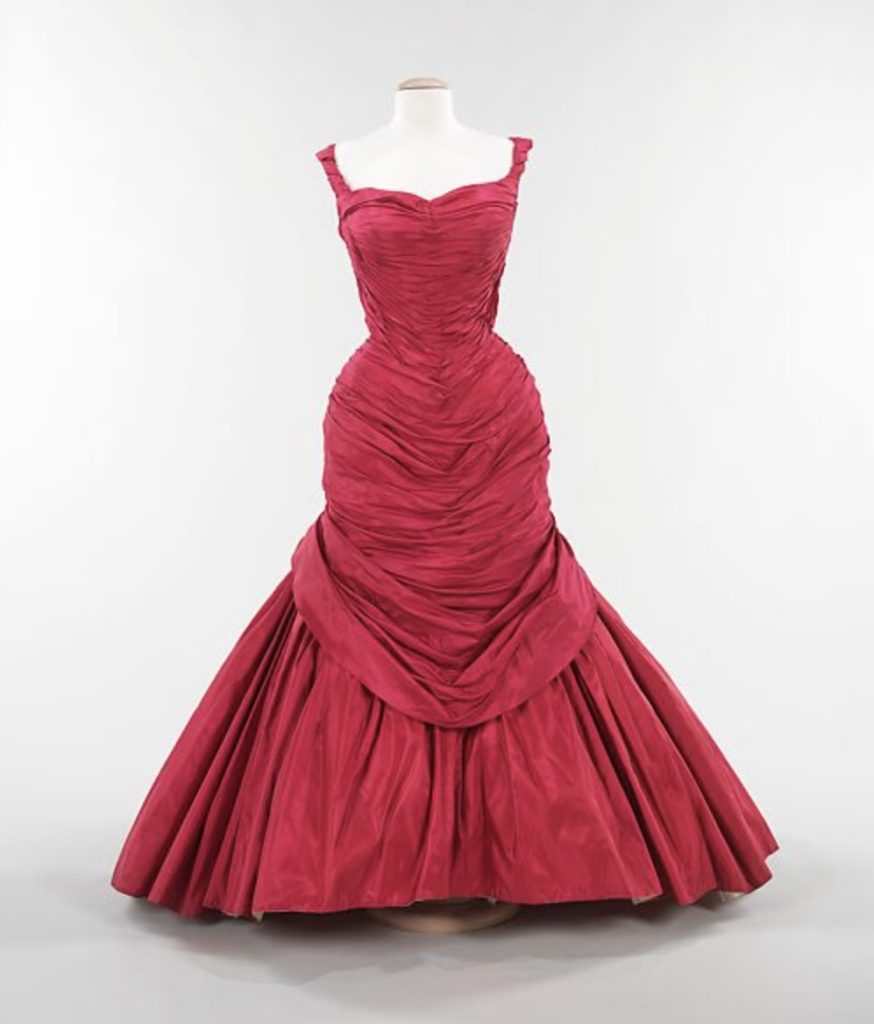
As for fashion inspiration Beavan drew from the fashion labels Nina Hagen, Bodymap and Alexander McQueen for Cruella. One of the most innovative costumes Beavan designed is a red ball gown Cruella wears in the trailer, revealed when a white fur cape is set on fire. The gown takes structural inspiration from Charles Jame’s “Tree” dress and is reconstructed from one of the Baroness’s (Emma Thompson) old dresses. The look signifies Cruella’s rise as a villain.
The Devil Wears Prada 2 picks up around 20 years after the first film; both the sequel itself and associate costume designer Molly Rogers have big shoes to fill. Rogers shares that the red ball gown Miranda Priestly wears while getting out of a cab is custom Balenciaga.
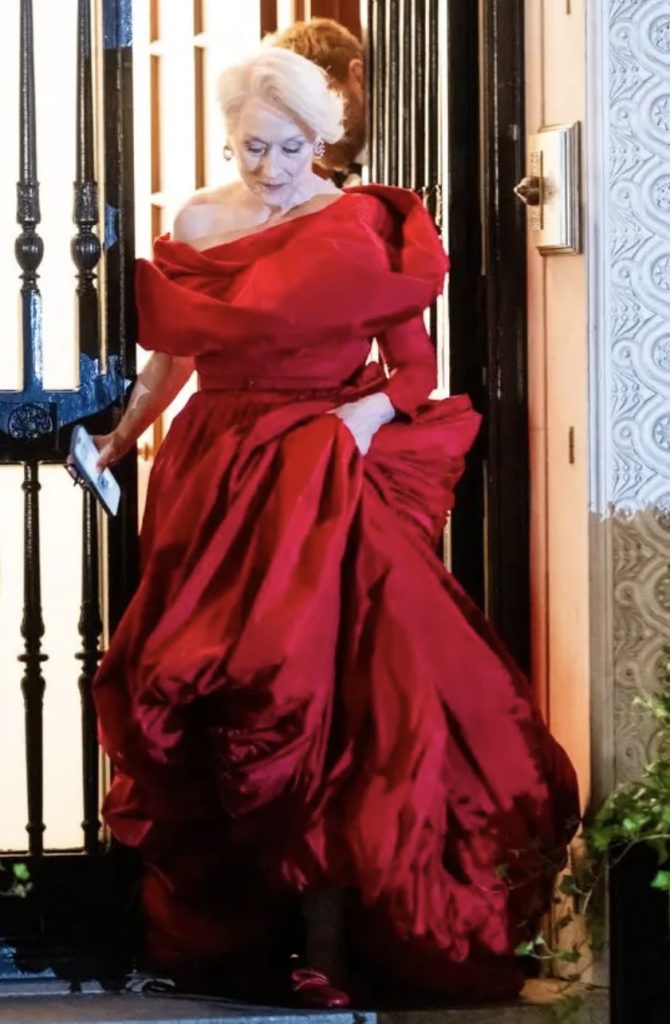
Rogers says that she considered having Meryl Streep wear a heel instead of the flat shoe which made it into film with the red Balenciaga gown. Streep insisted that they must stay true to the vision of Pierpaolo Piccioli, the Creative Director of Balenciaga. Rogers admits that Streep made the right call and that the lower shoe gives the look a regal quality.
Mother Mary focuses on the relationship between pop sensation Mother Mary (Anne Hathaway) and her former costume designer Sam (Micheala Coel). Director David Lowery brought on Bina Daigeler to design the past eras of Mother Mary when she was at the height of her fame. It’s clear from Diageler’s designs that she heavily draws from medieval Christian imagery for the halo Mother Mary wears and dresses her in regal jewel encrusted robes.
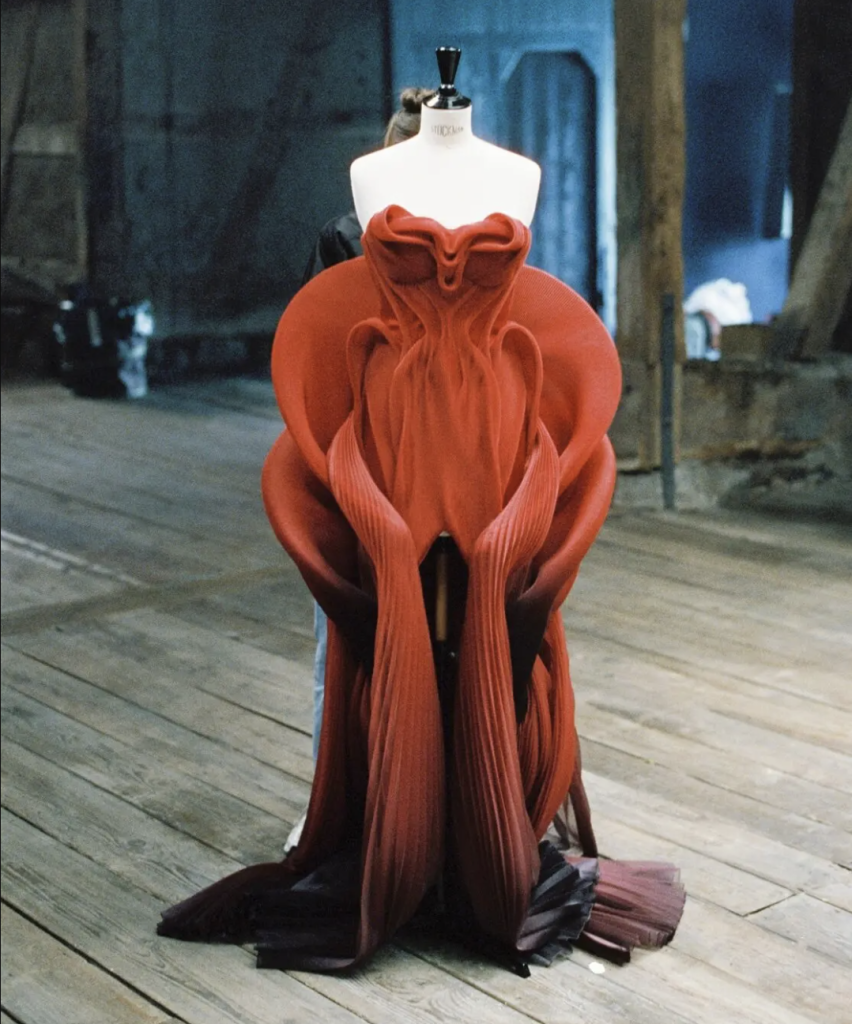
Following the trend of red dresses as a signifier of transformation, rebirth and opulence Mother Mary’s final outfit is a red and black gown. The dress is crafted from organza and designed by Iris van Herping who says the process of draping the gown was intuitive. The final product is a structured yet flowy garment that Herpen describes as more of “a vessel or a spirit” than a dress.
Recent costuming falls somewhere between the extravagance of the 2010’s and the everyday looks of the 2000’s. They converge on the color red as one of power, and all peel back the veneer of fame and wealth to uncover who each of these influential women in fashion are beneath their couture.