
What is sustainable transportation, and what’s the most effective method?
Sustainable transportation is a form of travel with the least amount of carbon output. Methods like biking, horseback, and, of course, walking produce zero emissions. Yet, they aren’t the most practical. For long-distance travel, cars, planes, trains, buses, and electric motorized vehicles/bikes are often the go-to.
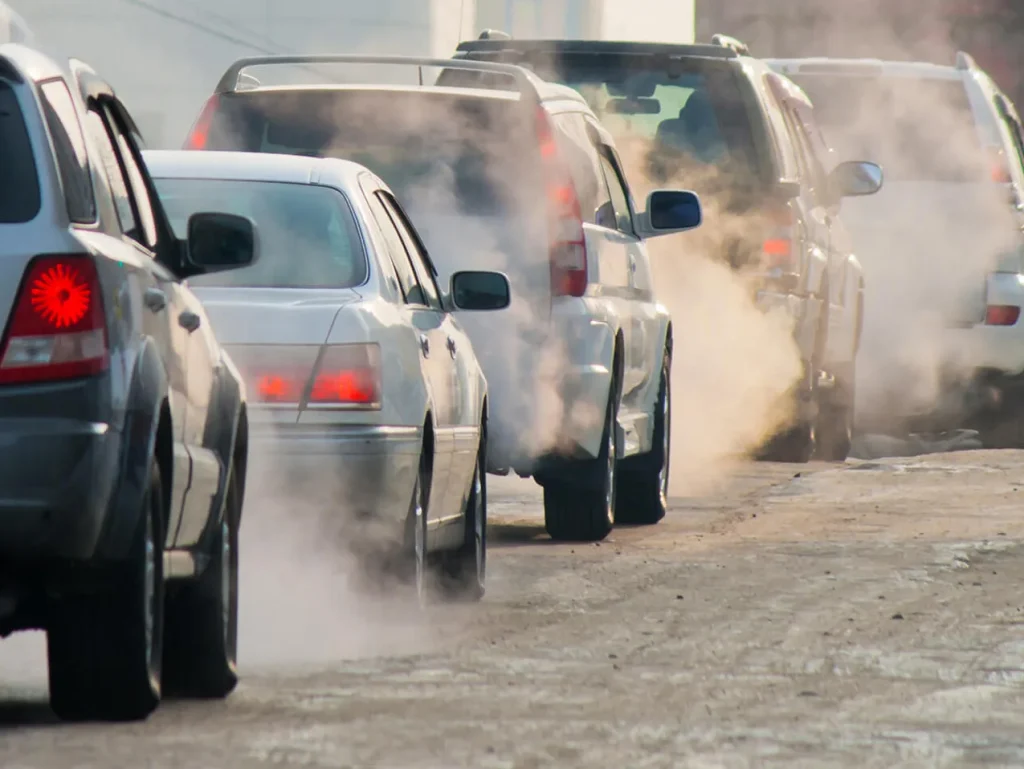
Though cruise ships are notorious for contributing more to the carbon footprint than any other form of transportation, they aren’t the biggest issue at hand. Cars release more CO2 into the atmosphere than bikes, buses, and planes alone.
While all the world is being challenged with global warming and climate change, America will be the focus for the purpose of this article.
Can we reverse the effects of climate change?
Yes. There is still time. According to the Climate Clock in Manhattan, the world has three more years to correct itself before the damage is beyond anyone’s control. Though if something were to be done about the issue, it should have been done around six years ago when the globe was battling COVID. During the pandemic, the air quality significantly improved due to drops in the number of people being outdoors. Meaning, no traffic. That time frame would have been the ideal time for government intervention with climate change. Sadly, we are back at square one. We are in a global environmental crisis that, if not paid attention to, will take us all out with it. The air will soon become toxic and unbreathable. Climate emergencies like this shouldn’t be taken lightly. We must act now.
How did it become so bad?
To answer this question, we first must pose another: What would a society without cars look like? For starters, it would be completely unlivable. Most (if not all) Americans take the highway every morning and afternoon just to get to work. Some commutes take around thirty minutes to an hour. Now imagine that time being doubled, maybe even tripled, by being forced to walk it instead. So, how did we get here? How could we have made our own nation so vehicle-dependent, knowing that the long-term effects would be so detrimental? The simple answer is that America is greedy. Purposely placing grocery stores, dentist offices, and schools out of reach from local neighborhoods and forcing citizens to rely on hard infrastructure. Uprooting the ground that we walked on and having it sold back to us in the form of a two-toned road. Then, convince citizens that cars are fun by selling them in different colors and sizes, and by offering customizations. When people hate owning cars. They hate how unreliable they are and how much maintenance is needed just to keep them intact. Everyone relates to the feeling of absolute dread whenever their car’s check engine light begins to flash. They hate how expensive gas prices have become. They hate the fact that car accidents are more common than plane crashes. Truth be told, all the reasons listed are probably why most people vacation to walkable cities like New York City, Paris, Venice, and/or Tokyo. They need a vacation from driving!
Who benefits from a car-dependent society?
If driving cars is proven to be terrible not only for the environment but for people, then how have they been able to stick around for so long? Corporations capitalize on them. Car manufacturers and dealerships make profits. Last year alone, Jeep sold over one million cars globally, which brought in an estimated amount of thirty billion dollars in revenue to America. Oh, and if you need a place to park that brand new Jeep of yours, it’s going to cost you about thirty thousand dollars to add a garage extension onto your house. Not to mention how much money a city can make just from adding parking meters on the side of a few busy streets, since parking lots fill up within a matter of minutes. Auto repair shops and gas stations are, of course, always booming with business as well. Funny enough, it would take less time to walk to a nearby gas station than to walk to a Walmart or Target.
Cars contribute too much to the economy for any government to fully waive them. The weight is on your shoulders to find methods of transportation that are less dangerous, more reliable, and more sustainable. This being said, let’s discuss who doesn’t benefit from a car-dependent society. That would be the drivers, of course. America is in the top fifteen countries with the highest obesity rates among its citizens. Tons of health issues arise because of limited physical activity. When most people hear ‘exercise,’ they’re probably visioning a full-blown workout at the gym, but that doesn’t have to be the case. Walking is proven to be a highly effective and low-impact activity that improves cardiovascular health and blood sugar regulation. Citizens who reside in walkable cities have been recorded to have significantly better bodily functions and even live longer. Between adults having desk jobs and children sitting in classrooms all day, we could all find more time to be a little more active throughout our day-to-day lives.
Are electronic motorized vehicles the future?
What is EV? Electric vehicles are cars without an engine. Instead, they run on a battery charged with electricity. Although these options are great because they do not burn fossil fuels, the batteries they run on are made of lithium. Lithium is a metal element that needs to be mined to be obtained. The extraction process is brutal, and the environmental impact that it has on the planet is damaging. During a mining process called brine mining, lithium is removed from saltwater sources beneath the Earth’s surface. The risks of polluting the water with toxins that are released during brine mining are very high. These toxins are very harmful not only to wildlife, but also to humans as well.
Yes, society has a long way to go to figure out a more practical, safer, and environmentally friendly way of extracting lithium, but fossil fuel mining is responsible for about thirty-four billion tons of carbon dioxide emissions, and lithium mining is responsible for about two million. Strictly lithium mining can cut down on the amount of CO2 in the Earth’s atmosphere by more than half. Despite the harsh reality of brine mining, it’s still heavily encouraged by the public to obtain electric cars.
As a matter of fact, a very popular car brand in the early 2000’s, Hummer, unfortunately, stopped selling cars in 2010. Recently, in 2022, they came back and launched their newest Hummer model, the 2022 GMC Hummer EV. Along with their rebranding, they introduced an entirely new line of electric vehicles. Regardless of its incredibly large price tag, it’s still a huge advancement. The number of companies that are now evolving their brands to include more electric options is increasing every single year.
There’s already great pleasure in seeing plenty of Teslas and other electric cars on the road. No doubt that, soon enough, more than half of the population will resort to owning and driving electric cars.


